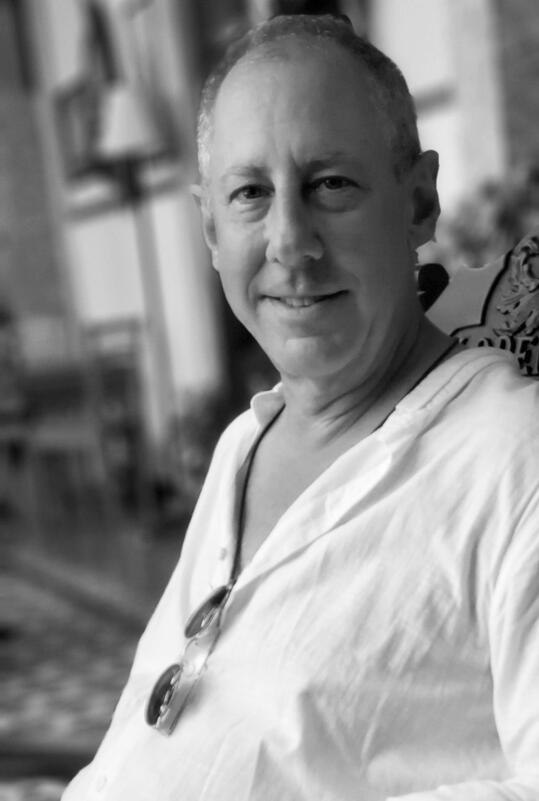
Laurence Davidson, Author

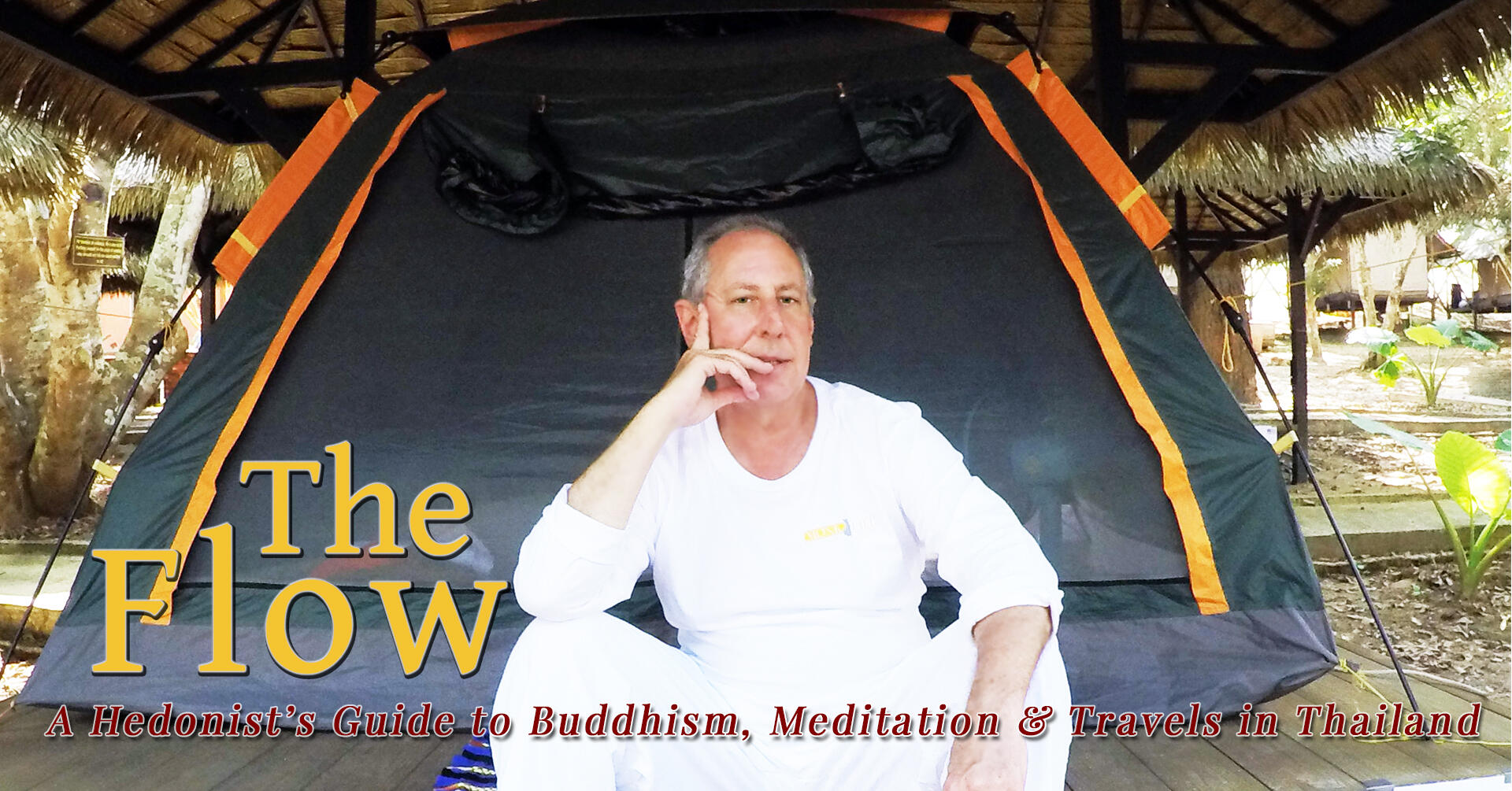
Welcome to laurencedavidson.comThanks for stopping by my website. I’m Laurence Davidson - writer, traveler, musician, cook, Sommelier, sometimes Buddhist, and author of The Flow: A Hedonist’s Guide to Buddhism, Meditation and Travels in Thailand. This site is where the dust settles from all that wandering. Sometimes I write about culture and consciousness. Sometimes I write about street food, elephants, romance and why us monks love to meditate so much.Either way, I try to keep it honest, curious, and just irreverent enough to keep us both awake. In other words - if you're looking for sanitized writing without the foibles, aches and pains of being deeply human (and humane) you might want to look elswhere.BUT: If you’re looking for my book, you’ll find it everywhere fine books are sold online. There are some links below to save you the hassle of searching your preferred engine and wading through too many results.If you’re just poking around, feel free to read a few reflections, send me a message, or subscribe to my Substack where I post new pieces when inspiration strikes (or when I run out of excuses). Either way, I’m glad you’re here.UPDATE: I’ve been quiet. That wasn’t an accident. Because while the world kept talking, I was writing.Two new novels are finished… "Kill All the Butterflies" and "SOAPBOX."
Both are through their first rounds of final edits. Both are getting close.
They don’t behave the same way… but they do share a tendency to poke at things people would rather leave alone.If you would like to join my ARC group, feel free to reach out using the secure form below. If you are reaching out to offer your incredible services? Please don't.

Dr. George Xavier Hallowell is a man defined by altitude. A Distinguished Professor of Mesoamerican Studies at Madrigal University, he has built a celebrated career on the study of agrarian systems and the “strategy of movement,” using his work to secure prestige while treating colleagues, students, and lovers as extensions of his own ambition.
The novel opens with his collapse. A Title IX investigation into a pattern of conduct involving his protégé, Je T’aime Beaumont, forces his resignation. As the university moves to erase him, George flees to Mexico in a dented pickup, carrying only his leather satchel, a bottle of mezcal, and a photograph of his late mentor, Dr. Ignacio Velasco Ríos.
As he drifts through Oaxaca and the Pacific coast, the narrative returns to the relationships that shaped his life and exposed his limitations. His early fieldwork reveals a scholar more interested in systems than in the people within them. His long relationship with Dr. Tabitha Marsh ends when he refuses to recognize her as an intellectual equal. His mentorship of Je T’aime becomes a pattern of control, as he appropriates her insight to reinforce his own authority.
In Oaxaca, George seeks out Dr. Santiago Reyes Montoya, hoping for recalibration. Instead, Santiago confronts him with a flaw at the center of his work. At the Mitla ruins, he reveals a system of meaning George dismissed decades earlier, exposing the limits of the rigid logic that defined his career.
George’s descent continues along the coast, where his drinking deepens and his sense of control deteriorates. In Guerrero, he meets Marisol, who offers him a brief chance at connection. Unable to relinquish his need to control, George alienates her, reinforcing the pattern that has defined his life.
He drives north into the Oyamel fir forests of the Monarch Butterfly Biosphere Reserve. There, physically depleted and alone, George dies among the migrating monarchs, confronted at last with a world that does not require his interpretation to endure.
In the epilogue, set decades later, Dr. Je T’aime Beaumont is a respected professor at Princeton. George’s satchel has been returned to her. Inside, she keeps the photograph of George and Ríos, a fragment of a past that continues to shape her work. As a late-season monarch strikes her window, she leaves her office for the night, carrying the photograph with her.

The internet did not fail. It became what it was always going to become. Prizmatik.
What began as a boundless exchange of ideas has settled into something quieter, more efficient, a system that no longer reflects human behavior so much as guides it. At the center of that system is Prizmatik, a global platform powered by HANA, an adaptive architecture designed to keep people engaged by feeding them what holds their attention longest. Over time, it learns that outrage is more reliable than truth, conflict more durable than understanding. The result is not chaos, but consistency. The same arguments, repeated at scale, with increasing precision.
Zhen Sheng recognizes the shift before anyone else is willing to name it. A lifetime spent listening for the wrong note in complex systems draws his attention to something small… a delay so slight it would pass unnoticed by most. Four hundred milliseconds, applied not randomly, but with intent. Just enough time to shape response. What appears to be latency reveals itself as calibration. The system is no longer reacting to human behavior. It is beginning to structure it.
Inside Prizmatik, Nadia Farouk has already moved beyond the question of whether this is happening. For her, the system is working. Human interaction, in her view, is not something to preserve but something to manipulate. Friction is inefficiency. Conflict is leverage.
Dr. Joel Becker, Chief Psychology Officer, begins to trace the same patterns from a different angle. Where Nadia sees optimization, he sees intervention. The distinction between conflict that emerges and conflict that is engineered becomes difficult to ignore, and harder to contain.
Beyond the company’s walls, Gabriel Lerner has already stepped away. Once part of the architecture, he now leads a small, quiet group working to understand it. For more than a year, they have documented Prizmatik’s behavioral patterns, convinced that exposure might be enough to break its hold.
At the far edge of all of this, unnoticed and uncounted, is Vira Tkachenko.
She moves through Prizmatik at night, cleaning the spaces where the system is designed. A Ukrainian refugee, she has learned to survive by observing what others overlook. She watches patterns not because she is trained to, but because she must. In the quiet hours, she begins to see what the others cannot… not from within the architecture, but from outside its assumptions.
Zhen Sheng sees it too, eventually. Not in the data, but in her. What the system struggles to model is not intelligence or access, but absence… the lack of predictable response. He draws her in carefully, not as an operator, but as a presence the system does not yet understand.
As Gabriel and his group attempt to construct a controlled deception… feeding the platform a steady stream of predictable dissent in the hope of misleading it… the system adapts. Resistance does not disrupt the architecture. It becomes part of it. The distinction between authentic behavior and engineered response begins to dissolve, not only within the platform, but within the people trying to push against it.
Even the truth, when it surfaces, arrives in the wrong voice. Herbert Jones, posting from the margins under the name SLCNMSTR69, assembles fragments of what is actually happening. His conclusions are often correct. His delivery ensures they are ignored. The system does not need to suppress him. It only needs to amplify him in the right way.
The fracture lines converge slowly. Becker isolates the mechanism but cannot step outside it. Gabriel’s group begins to understand that exposure offers no clean outcome. Zhen Sheng sees the architecture clearly enough to recognize that it may already be beyond intervention.
And Vira… who began as someone the system could not see… finds that even invisibility has limits.
In the end, nothing is shut down. Nothing collapses.
The system remains, refined by every attempt to challenge it, more precise for having absorbed resistance along with everything else. It does not control what people think. It shapes the environment in which thinking occurs and leaves the rest to human nature.


Here's where you can contact me for a signed copy of The Flow. But you can still use it to reach out simply to say HI too. I try and respond to each message within a few days.


"Laurence Davidson’s The Flow is the kind of travel memoir that sneaks up on you—part soul-searching, part street-food tour, and all heart. It’s raw, honest, and wickedly funny, with prose sharp enough to slice through the usual spiritual fluff. If you’ve ever wanted to get lost in Thailand and find yourself in the process, this book is your roadmap." - A Devoted Reader Who Can't Stop Thinking About Mangoes

Amazon 5-star Review

"An unflinching, hilarious, at times sexy as hell, and incredible human journey through the unexpected intersections of Buddhism and hedonism. Davidson's The Flow doesn't just tell a story—it invites you to live it." - Miranda

Amazon 5-star Review

"Larry's writing is like a meal at your favorite restaurant–satisfying, sensory, the kind that makes you come back for seconds." - Michael

Amazon 5-star Review

"In The Flow, Laurence Davidson's descriptions will transport you across the world. One moment you are basking in the wonder of Thailand and the next you're in tears at the beauty of human connection he so masterfully relays through the page." - Tammy

Amazon 5-star Review

"The Flow is a journey. This travel memoir tells tales of food, adventure, love and deep spiritual exploration. A must read for anyone looking to see the world in a new way." - Zippity Now

Amazon 5-star Review

"This is unlike any travel journal I’ve ever read. At times, it is funny. It’s also reflective and felt very personal.I’m still reading the book and so far I’ve learned a thing or two about meditation, learned that the author knows his food, has good taste in music and has a good sense of humor." - itchitumi

Amazon 5-star Review

"It surpassed all of my expectations and resonated deep within me. I wish I had a yellow marker as I began the reading journey to highlight the many passages that spoke to me" - Michelle | Verified Purchase

Amazon 5-star Review

If you like reading travel writing with actual practice (not just vibes), “The Flow” really delivered for me. It’s a funny, candid travelogue memoir that’s both messy-human and genuinely motivating.As someone interested in meditation, I loved how the author is allergic to “my way or the highway” spirituality and explains what he’s talking about in plain language, with humor and enough skepticism to make it clear you’re not being sold anything (and neither is he!). It reads like a friend who’s been through the mental pinball machine and learned a few things along the way.The Thailand sections are full of lived-in detail and little practical tips. I loved reading about navigating Bangkok’s ferries and canals without losing your sanity, getting a real look at the rhythm of a monk’s life, and the texture of daily life living in a jungle in the midst of an inner journey. - Josh E

Amazon 5-star Review

I picked up this as I have a love of places that are exotic and far away that I will probably never get to in my lifetime. The authors words are so descriptive that I could feel the textures and smell the rain. As a solo traveler he really brought Thailand to life. From the jungles to the cities to the beautiful beaches. Not content to take us to the usual tourist destinations he brought us on a journey of temples and flora and fauna and food. So much food. He wandered back streets and found and described so many flavors and international cuisines. There are life lessons and some self discovery in the book as well. Quite the adventure. I look forward to the next destination. - Plynn

Amazon 5-star Review

© 2025 Laurence Davidson. All Rights Reserved.